Why I built it
Sewing my own clothes showed me something ready-to-wear had hidden from me: clothes made for standardised bodies fit almost no one, and most of us conclude that the problem is our bodies rather than the way the clothes were designed. The hardest part of sewing for your own body is the step between your measurements and a pattern you've bought: working out which size to cut, and what to change first. I've taken a made-to-measure course with a sewing and pattern drafting teacher, and I still found it hard to carry the changes from my own block over to a commercial pattern.
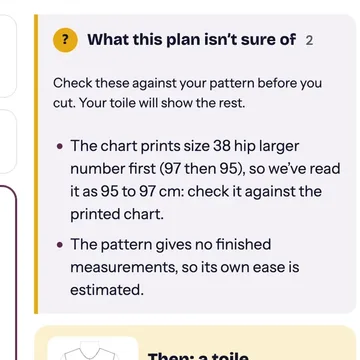
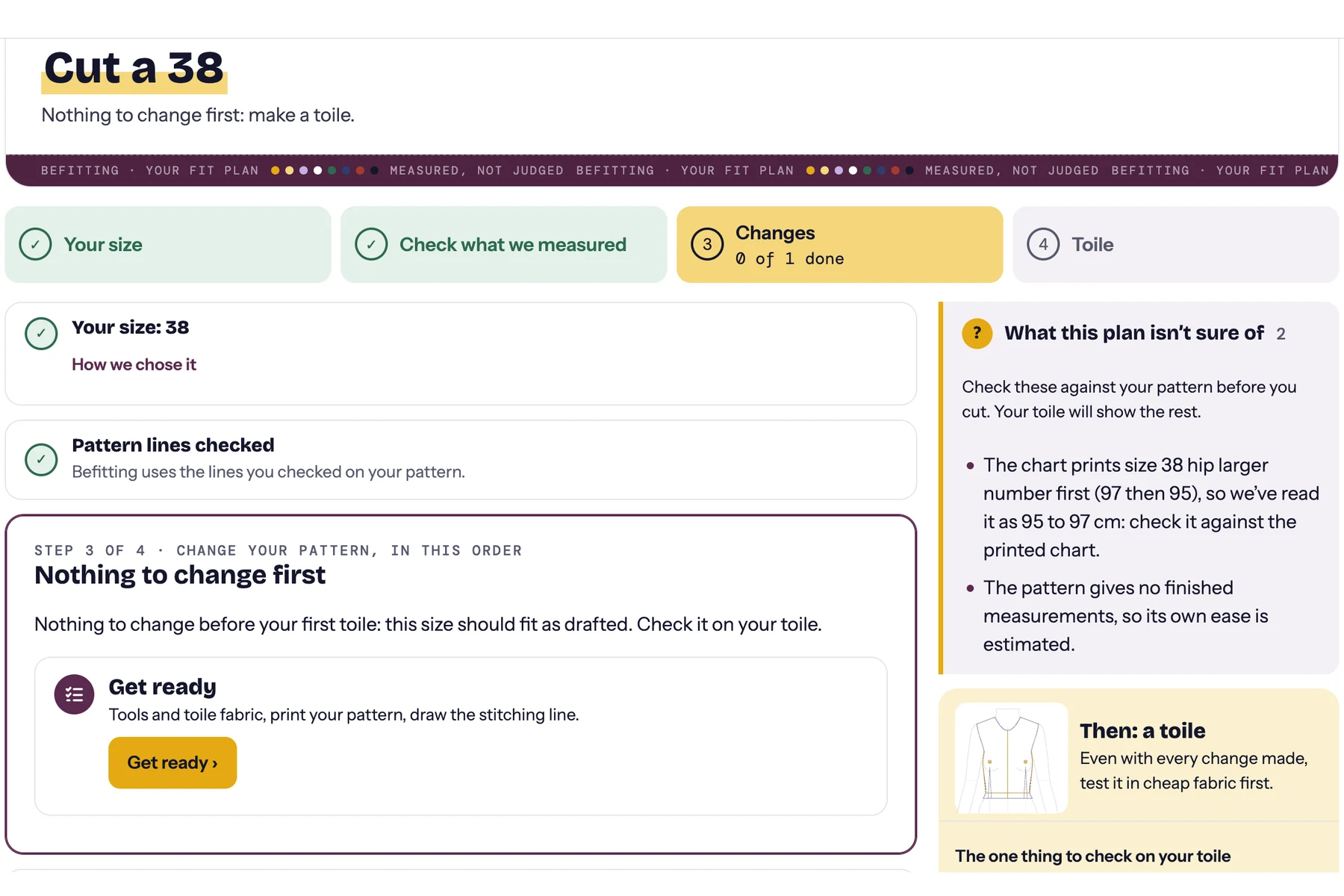
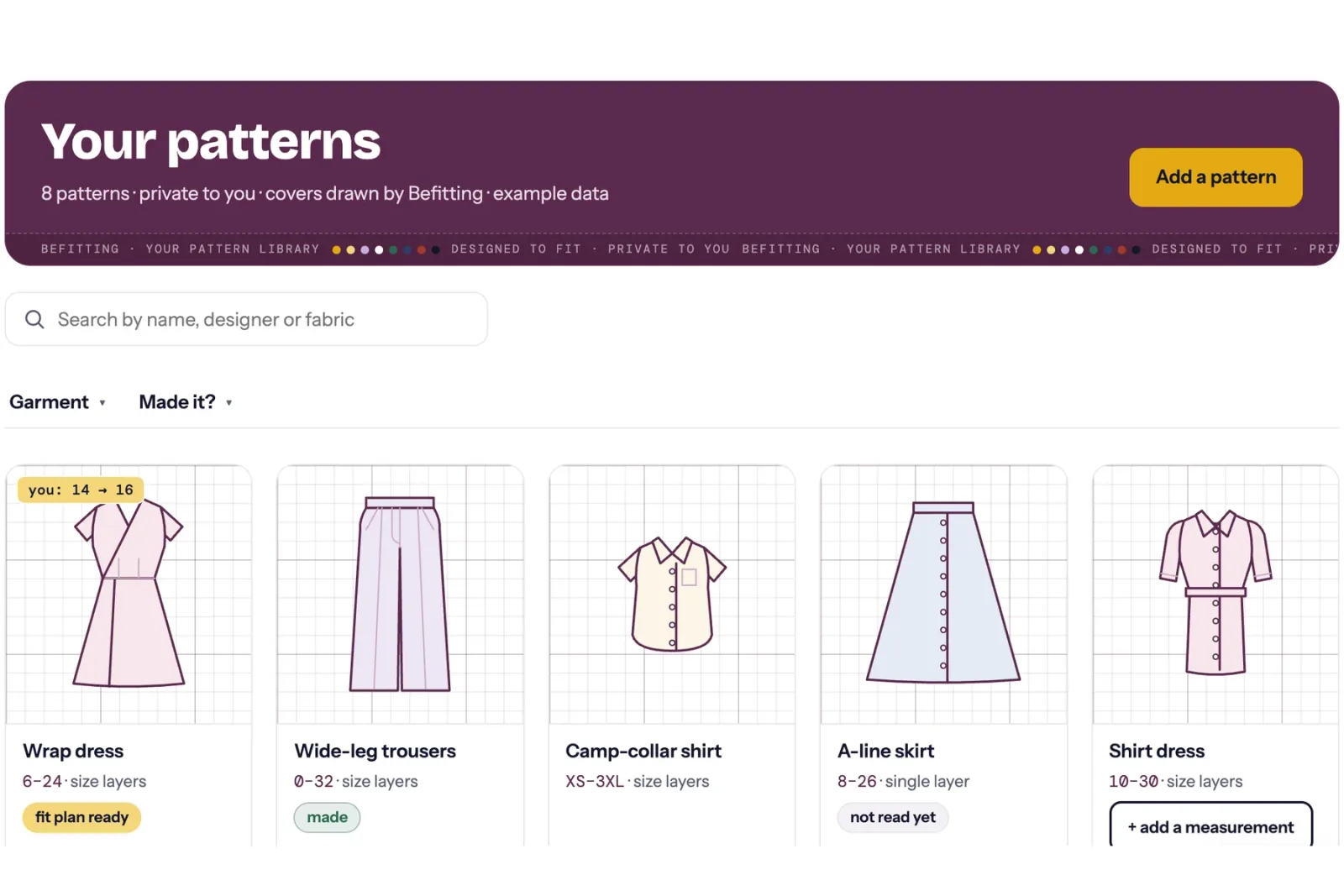
Befitting reads a pattern you already own, compares it with your measurements, and gives you a fitting plan: a starting size, the necessary adjustments in order, what it isn't sure of, and what to check on your toile. It then gives you the know-how to diagnose any remaining problems and fix them.
 Before you start
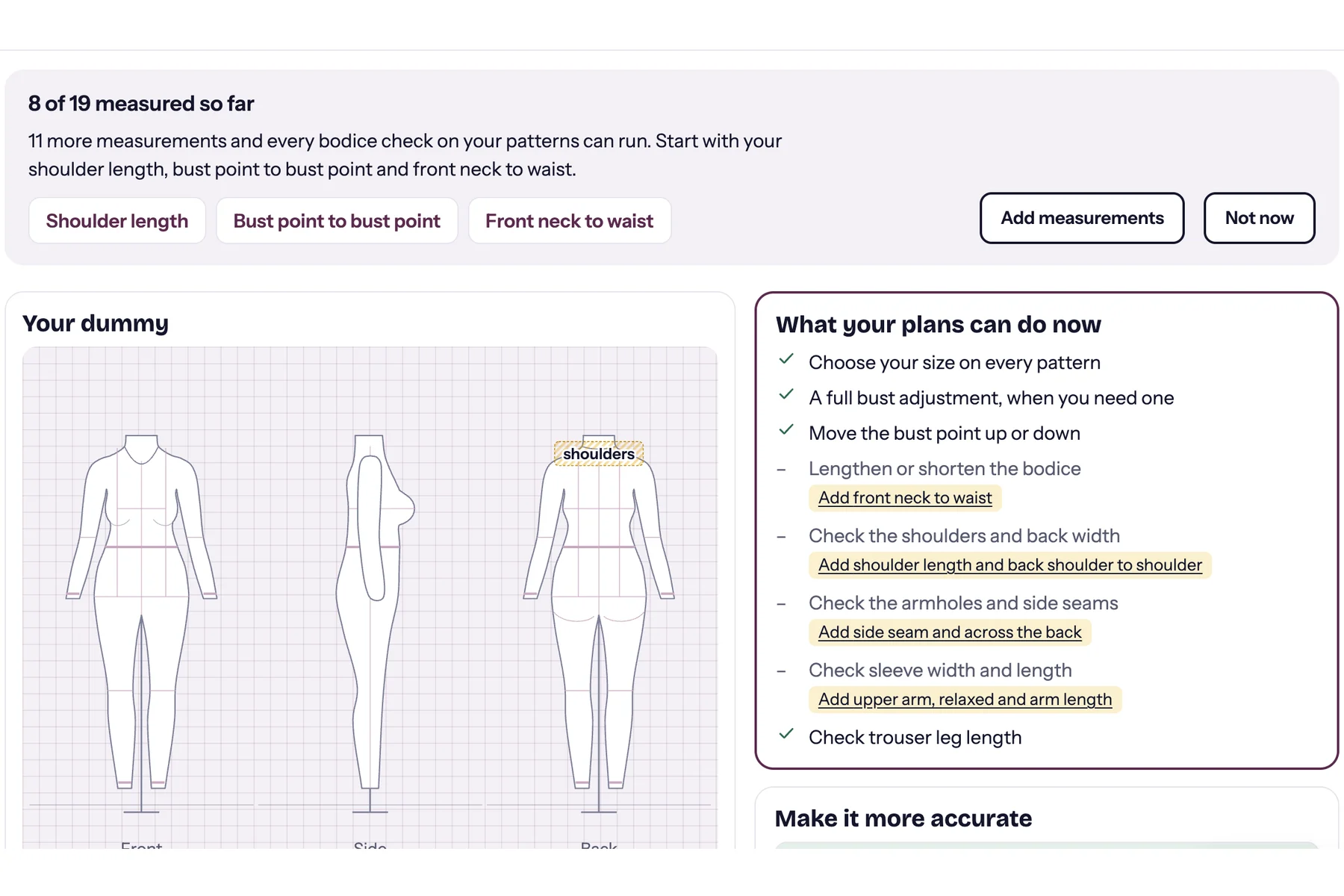
 Your measurements
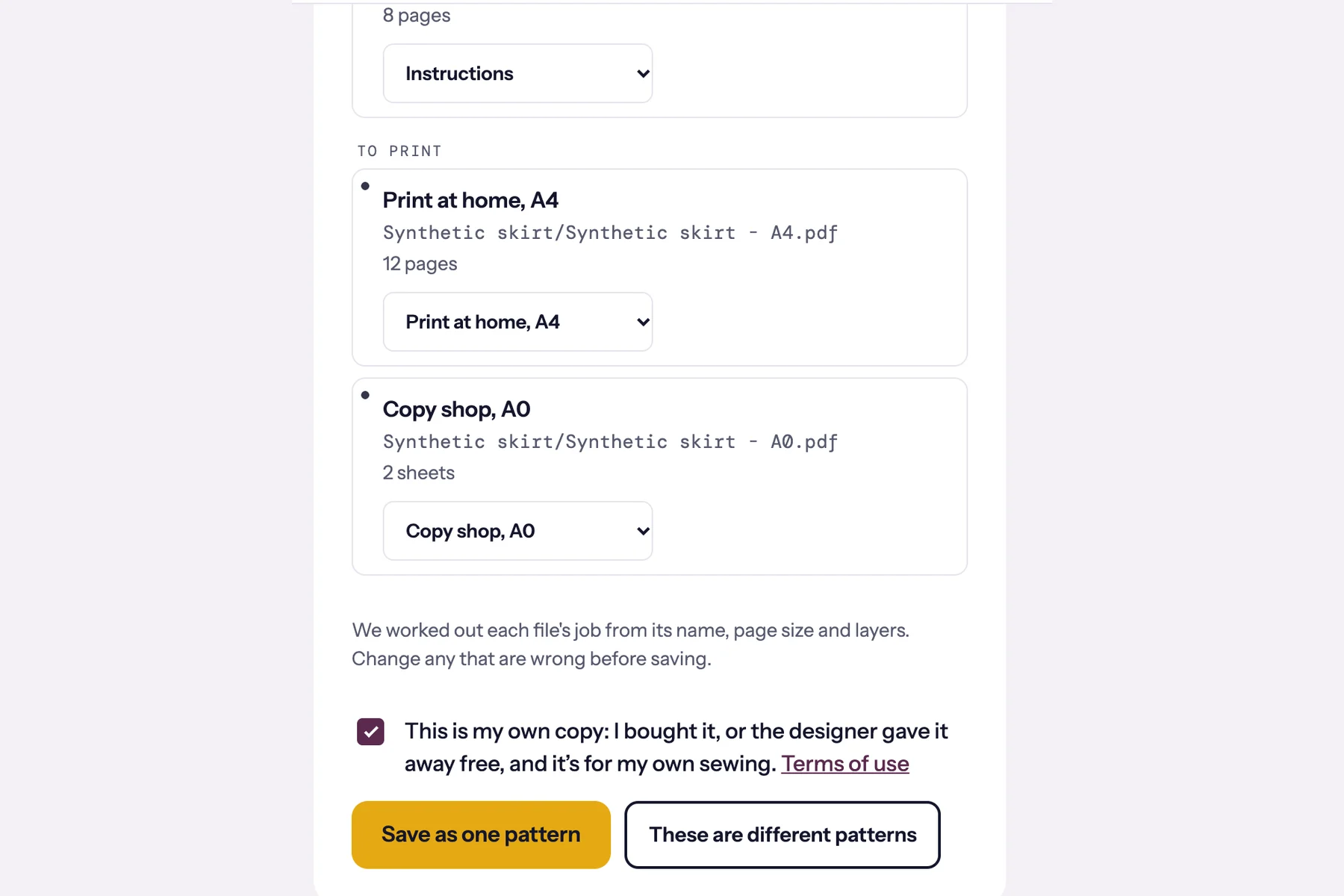
 Upload your pattern
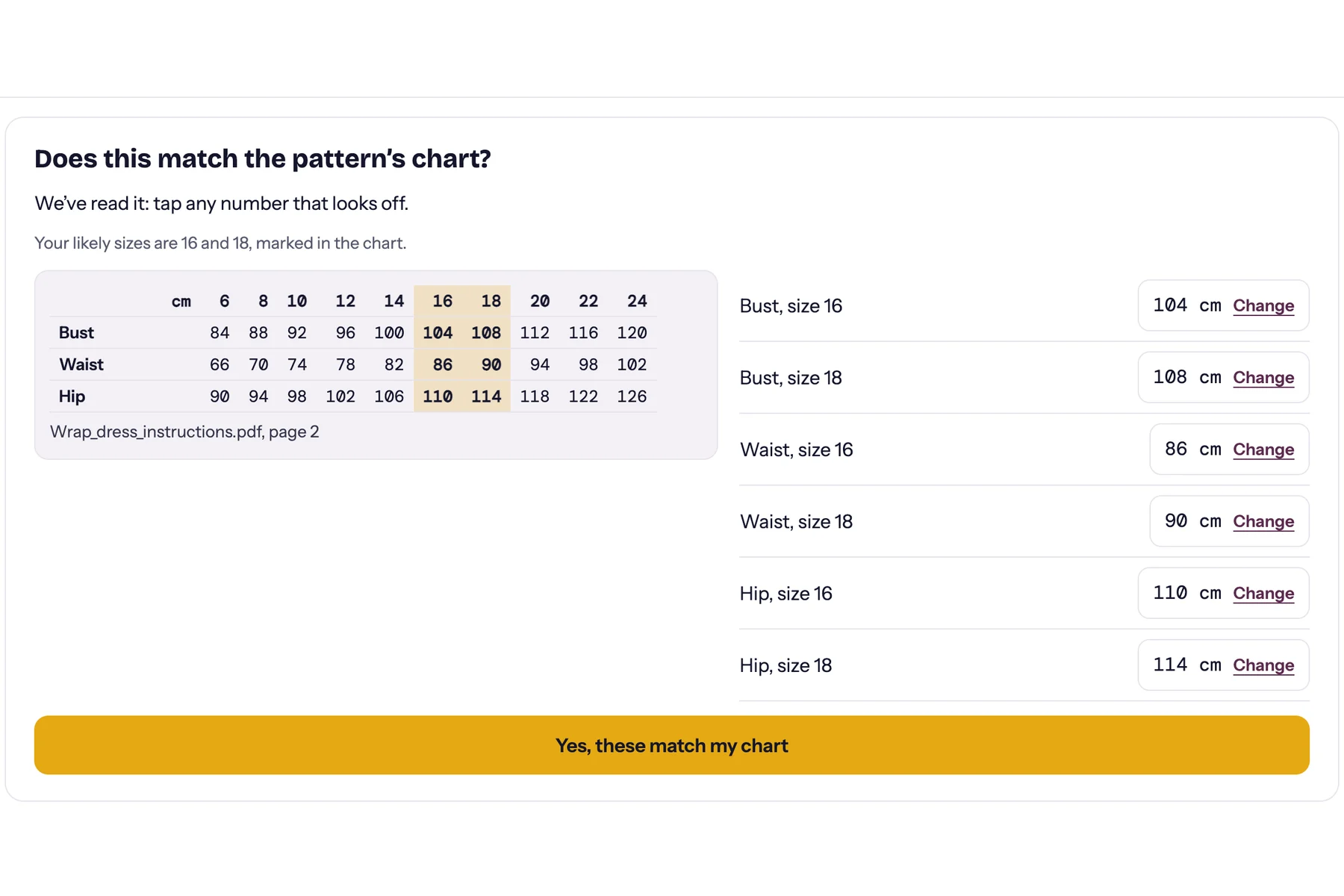
 Check the size chart
 Your fitting plan
 The walkthrough
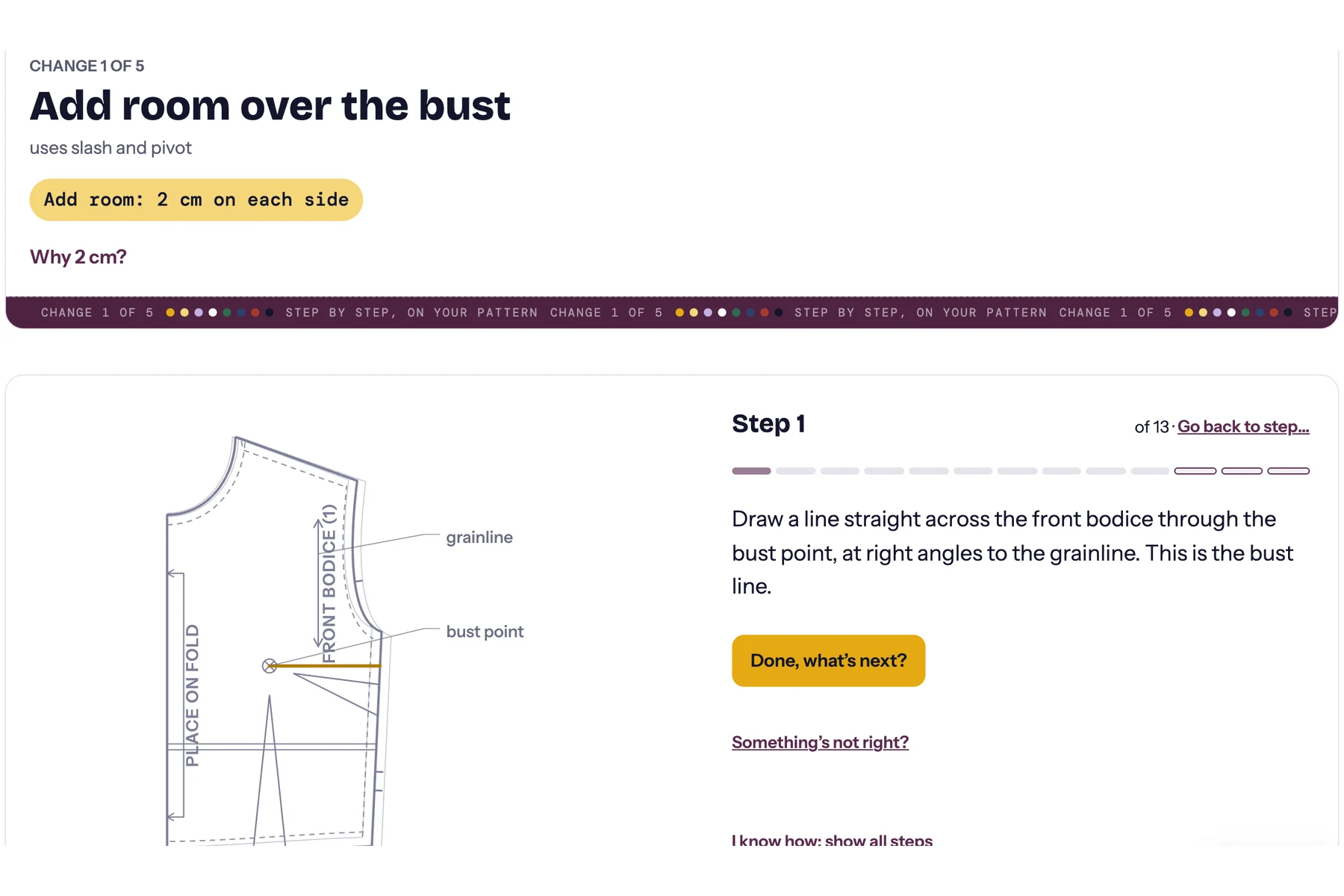
Why fit is hard, for both people and AI
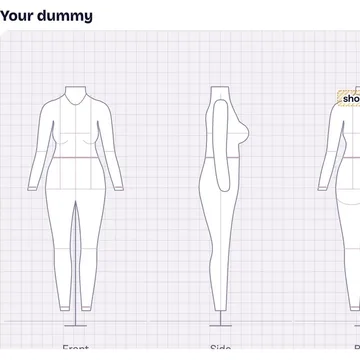
Most patterns are drafted from a standardised block and graded between sizes based on three measurements (bust, waist and hip), or four if you count height. Most of us start sewing our own clothes hoping that knowing those three numbers and grading between sizes will fix our fit problems, but it rarely does. A measurement around your bust, waist or hip says nothing about your proportions: where those three points sit relative to each other, or how much of each measurement sits in front of you and how much behind. It can't tell you whether your shoulders slope or your back sways either; posture changes how a garment hangs in ways no tape measure records. Getting something to fit means accounting for all of it. This requires more measurements, taken far more precisely, as well as some judgements that measurements alone can't make. That's why the fashion industry struggles to make clothes that fit, and why a home sewist working only with their own measurements still finds it hard.
It's tempting to think sewists could simply ask a general AI model, but my first tests showed why that doesn't work. In my first toile check, I showed photos of nine toiles, including one that fitted well as a control, to three models: Claude Fable 5.2, Claude Haiku 5.5 and Google's Gemini 4 Carbon. The best of them, Fable, found only a third of the problems. Fewer than three in ten of the problems it named were really there, and every model invented a problem for the toile that fitted well. My early attempts at choosing sizes were no better. The models only improved after they were given additional information and a set of rules to follow.
What's already out there
There are plenty of sewing apps, but none of them solve the problem Befitting is built for. Made-to-measure generators draft to your measurements but only from their own catalogues; drafting software assumes you already know how to fit; and pattern organisers and printing tools manage your patterns without touching their fit.
Befitting sits in the gap. It starts from a pattern you already own, tells you what to change for your body, and links that plan to the know-how for making the changes and to a record of whether it worked. Reading a pattern is fast becoming routine for AI models, so that isn't where Befitting's value lies. Its value is in the expert rules that turn what's read into advice and, as more people use it, in the record of what actually fitted, which no general model has.
What I checked before building
Four rounds of desk research with Perplexity, argued over by my agentic builder team, reframed the idea. I'd started from blending sizes on a PDF, but the threads people post when something doesn't fit ask a different question: what's wrong, and what should I fix first? The copyright research moved it further, so rather than storing a modified copy of a designer's file, Befitting gives you a plan to apply to your own pattern. Much of the caution in the research came from assumptions about what I might not be able to do legally, but I worked out new ways to build the features people need while respecting copyright and without putting too much of the burden back on the user.
A survey of sewists showed me how many still sew from paper patterns, so I made sure Befitting gives useful suggestions even when it can't read a pattern. It also confirmed that the fitting plan, more than the pattern library, is what people want most.
The plan's core approach follows my teacher's methodology, and her rulings on test cases, made before she saw any of the app's answers, form its golden dataset. I'd planned to write those answers myself, but wasn't confident giving expert fitting advice, which told me the expert's judgement needed to be in the product. The rules follow human expertise, and code scores the plans against her answers, so no model marks its own work. I also audited her method alongside those of other fitting professionals, and where they disagreed I kept the disagreement on record rather than averaging it away.
What the experiments changed
Before building the app I ran six small experiments with Claude Code, each asking one question, with a spending cap and a point at which I'd stop. Together they cost $13.25 in model spend, and they changed the design more than any planning session did.
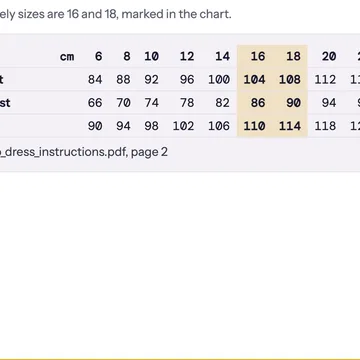
- Can a model read a size chart? Yes, with the person checking it: 13 of 15 reads from page images were fully right, and no model invented a value in any read.
- Does it matter whether a person or a model reads the chart? Mostly not: plans built from either gave the same size in each region 93% of the time.
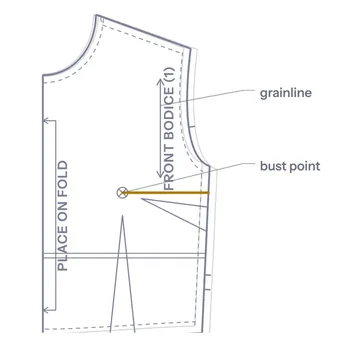
- Can the pattern pieces themselves be read? Yes. A model is good at spotting the key points on a pattern piece but not at measuring between them, so the model points and code does the measuring.
- Should the plan come from rules, a model, or both? Rules. Adding a model on top didn't correct mistakes in the rules, because even the strongest model tended to repeat them, so every number comes from the rules and improving the plan means improving them.
- Can a model diagnose fit from photos of a toile? It's getting there. With a rulebook to follow, it's performing relatively well, but the test photos were also used to write the rules, so it needs testing on fresh photos before I rely on it. In the meantime, you choose what you see on your toile, such as drag lines, folds or gaping, and get the changes that might help.
- Does it work on patterns I didn't build it around? Yes, after fixes. My first blind test on new patterns showed up layouts it couldn't handle yet, which I come back to below.
The experiments also showed me how much patterns differ underneath. I researched the industrial blocks used by the big pattern companies and by independent designers, to see whether one set of standard rules could work across them all, and it couldn't. The blocks differ enough that the starting point has to be working out which industrial block a pattern was based on, then what needs to change in that block to fit the person, and only then carrying those changes back to the pattern.
The legal side
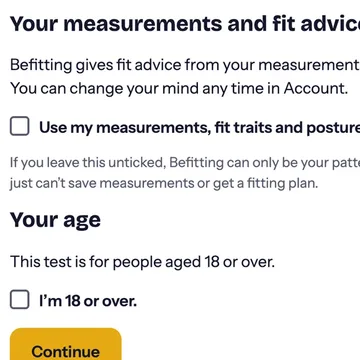
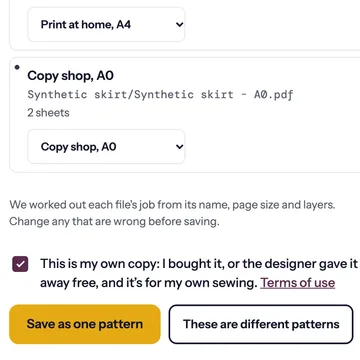
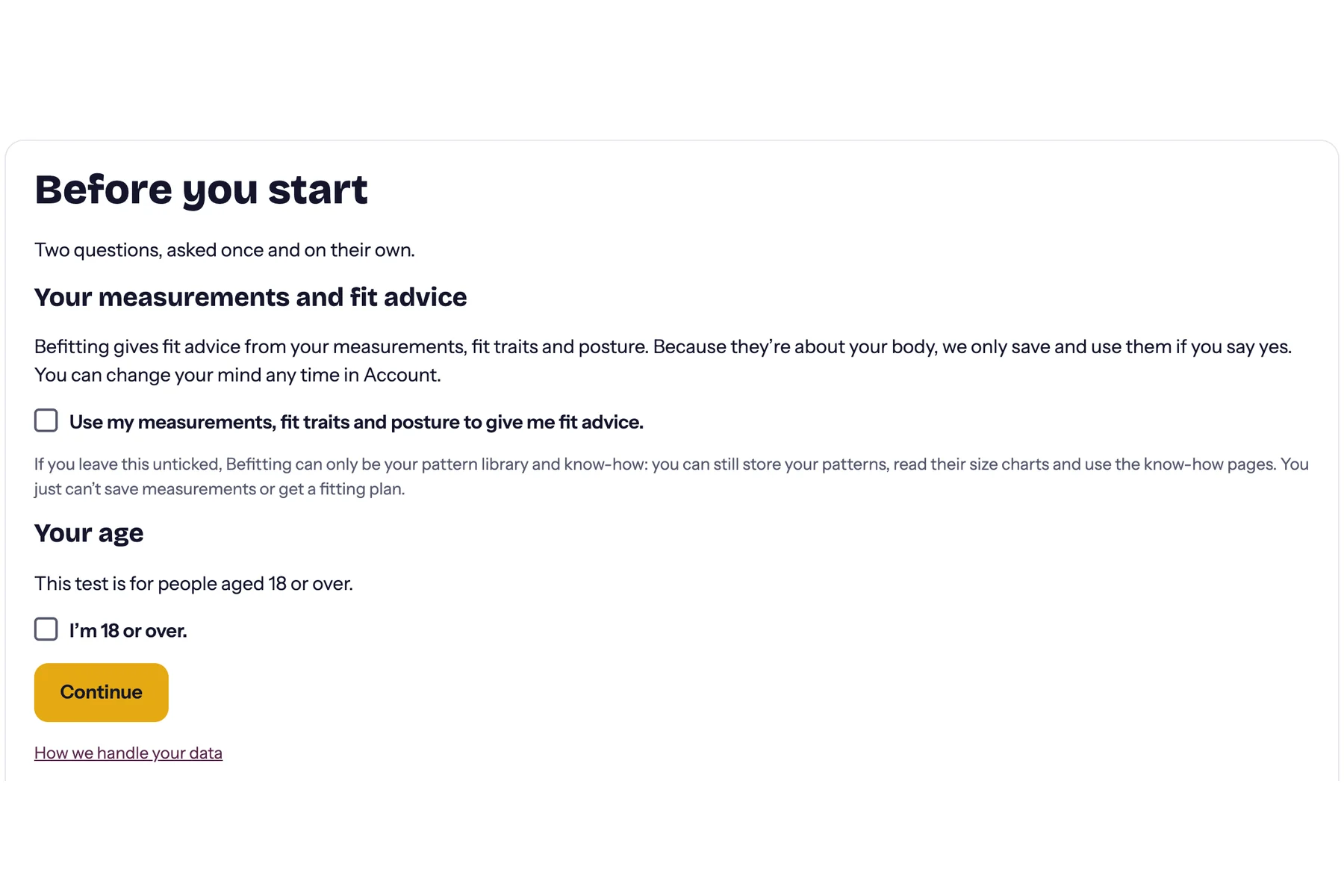
Patterns are copyright works, and many designers' terms restrict what you can do with their files, so the legal questions shaped the product as much as the technical ones. Locked files and any designers who ask not to be read are left alone, and you confirm a pattern is your own copy before you can save it. Body measurements are sensitive personal data, so you consent explicitly and must be 18 or over.
I used Perplexity to carry out a legal analysis, and Claude Code to audit the codebase in line with that analysis, working out where the biggest risks lay and how to reduce them without losing key features or making the app harder to use. If Befitting proves commercially viable and I take it further, I'll take a solicitor's advice. The legal side also limits how I can solve accuracy problems, because the obvious fixes, such as gathering more patterns to learn from, have to respect the same rules.
Making it trustworthy
Before opening Befitting to testers, I set its never-events, the outcomes that must never happen, and a North Star metric. There are over thirty never-events, including:
- a change in the wrong direction, or "fits as drafted" when a change is needed;
- an amount produced or changed by an AI model, or an invented pattern fact;
- medical advice, or a judgement about someone's body;
- a measurement in a log;
- one account seeing another's data.
Some are checked on every plan as it's made and others by tests that stop the build; the rest still rely on review, which I'd most like to automate next. A misprint in a chart, for example, is flagged and kept exactly as printed, after a model quietly "corrected" one in an early test. The North Star is finished garments whose fit is rated 4 or 5 out of 5, read alongside the number of toiles per finished garment, so the app can't look better by encouraging people to skip the toile.
Which mistake is worse depends on what happens next. At the plan, a toile always follows, so an unneeded change is worse than a missed one, and the rules are being set to lean towards not changing when the evidence is borderline. At the toile, the next step is cutting good fabric, so a false "fits well" is the most harmful error. A missed change that a toile wouldn't catch counts as harmful wherever it happens, and has to stay at zero. I think it's the most useful lesson from any of my builds: a single accuracy score can't tell you whether a product is safe when the cost of an error depends on the step that follows.
Is it any good yet?
It isn't quite proven yet. On my teacher's first five cases, the rules went from every size right in 1 of 5 to 4 of 5, with no harmful changes, but the rules were fixed on those cases, so that's a training score. A strict hold-out set is what I'd insist on in production, but with about a dozen readable patterns it would have starved the build. Instead, I measure each new pattern by hand before the app reads it, score that first read, then learn from it. The app couldn't read two of the first three at all; after fixes, it matched my measurements to within 1 cm on nearly every value, another training score, since the fixes were made on those patterns. Two more are held back for a final check.
The checks needed checking as well. An AI review of the write-up, against my own notes on best practice in AI product development, found that the test scoring plans against the answer key quietly passed whenever its cases were missing, so the build stayed green without testing anything. It now stops the build instead, and a check on every live plan holds back any plan that breaks a never-event it's able to check. The bar for outside testers is set in advance: every size right in about 70% of 15 or more cases, 80% of required changes found, no harmful changes, and my teacher's sign-off on the know-how. None of it has been met yet.
Where it's heading
I'm making progress, but slowly, because what limits accuracy now is data. To know I haven't simply fitted the rules to the dozen or so patterns I have, I need many more PDF patterns, which are expensive. Reliable toile diagnosis needs many photos of toiles that fit and toiles that don't, which take hours of sewing and would only show how patterns fit my body. It's a familiar problem in AI products: accuracy won't improve without scale, and scale won't come without putting something imperfect in front of people. I don't think it stops Befitting working.
The next step is an early beta with willing testers, with the toile as the safety net: every plan asks you to check it on a toile before you cut your fabric, so a wrong suggestion costs a toile rather than a garment. Testers' patterns stay in their own accounts, so the beta will improve accuracy from what testers confirm, what they see on their toiles, and whether the garment fitted. When photos of toiles come in later, it will only be with consent, cropped to remove faces and sent without names or account details. The measure that matters is whether people come back to tell us "Did it fit?", because those answers are what will make the next plan better. I'll write up what the first testers teach me.
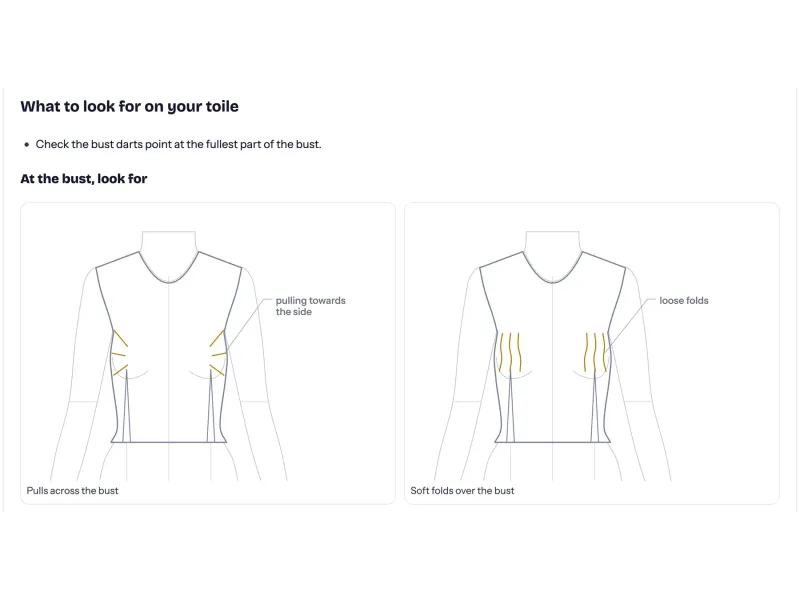
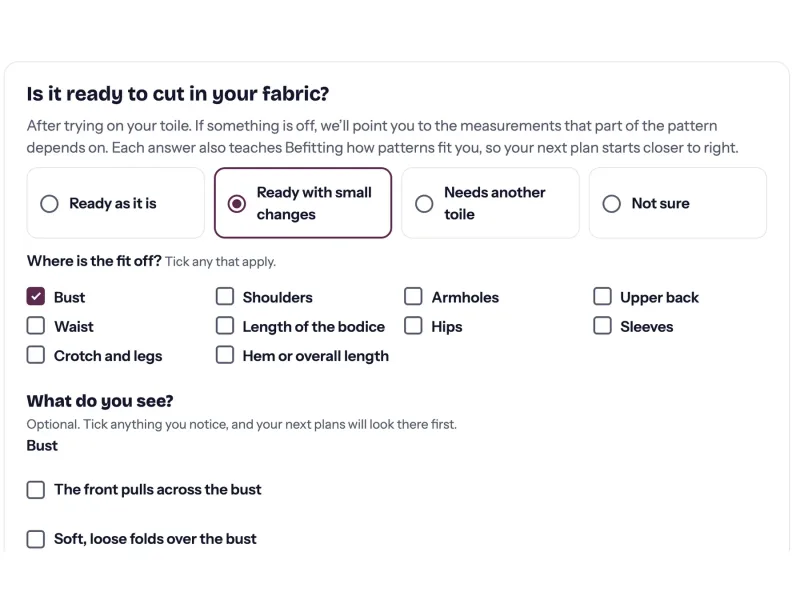
What testers see on their toiles, and whether the garment fitted, are what the beta learns from.
If you sew from patterns you've bought and fitting is the part that holds you up, I'd like you to try it. If you've built an AI product that had to start before it had the data to be good, I'd like to hear how you got through that stage.